Honouring a father who has passed involves treasuring his enduring legacy of love, resilience, and the lessons that continue to influence our daily lives. Although he is no longer with us, his presence endures in heartfelt memories, shaping our values and offering comfort through the enduring, meaningful moments we shared.
It has been 9 years. I miss you, dad. My dad was F de.
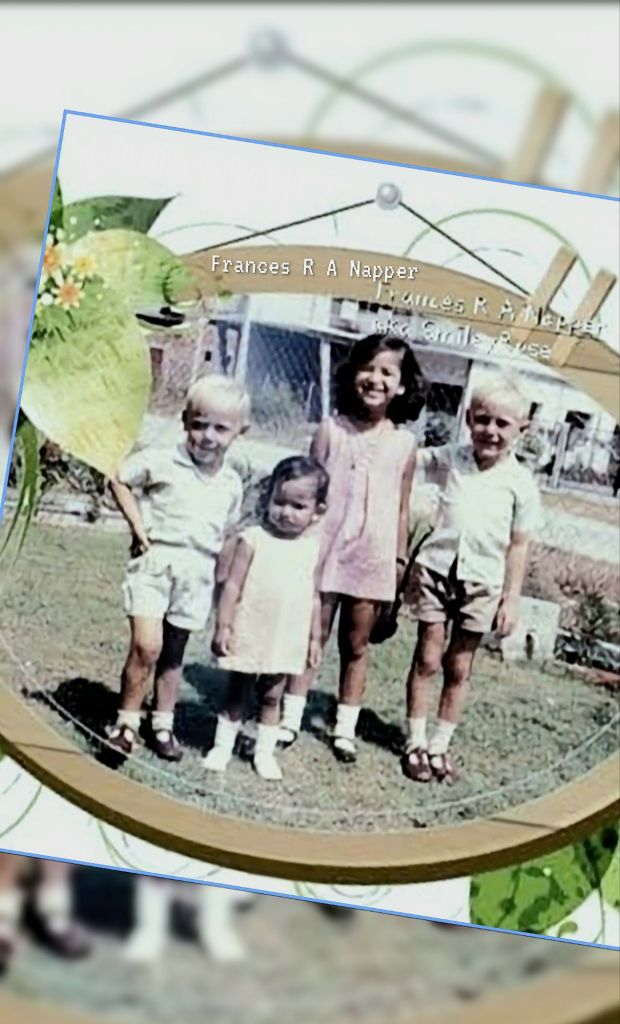
I cherish my childhood memories. This is an old photograph of me at the age of seven, wearing a pink dress, alongside my younger sister wearing an orange dress. I can not recall the names of our friends, although I seem to remember the names Michael and Gary; however, I am uncertain. The photograph was taken in Penang, Malaysia, during my father’s military service with the Royal Air Force. He was stationed at RAF Butterworth, and we frequently went to see him as he crossed the ferry to and from the base. I recall an occasion when my father was late arriving at the ferry terminal; he attempted a daring “Mission Impossible” stunt by running and jumping onto the departing ferry. Unfortunately, he missed and was left hanging onto the side of the deck until assistance was provided. He subsequently injured his ribs and received several bruises. Fortunately, he avoided falling into the sea, which was known to be populated with jellyfish. 😱
Since returning from my break away, I have been sleeping at regular times. My eyes look so much better. I need to be in bed by 10 pm, these days. No more late nights. I wake up feeling a lot better.
A. Apologising is appropriate when an individual acknowledges that they have made a mistake. One cannot apologise for something they are unaware of. Open communication about the matter is therefore beneficial.
You may sometimes accept differing opinions if the matter is minor or if the individual is at fault; in such cases, an appropriate apology should be offered.
If you don’t talk, then nobody ever knows that they have done something wrong.
 SmileyRose Ramblings by
Frances Rose Agnes Napper (She/Her)
SmileyRose Ramblings by
Frances Rose Agnes Napper (She/Her) 